The following appeared in the January 26, 1920 Evening Public Ledger:
PENNSYLVANIA FARMS FOR SALE
GRAEME PARK FARM of 191 ares, 18 miles from Phila., in Horsham township, Montgomery county. For particulars address M.B. Penrose, Hatboro, R.F.D., Pa.
The Library of Congress has made historic newspapers, dating from 1836-1922, available in their Chronicling America Series. Papers are easily searchable by keywords and location.
Saturday, January 26, 2013


Saturday, January 19, 2013
A Colonial Valentine
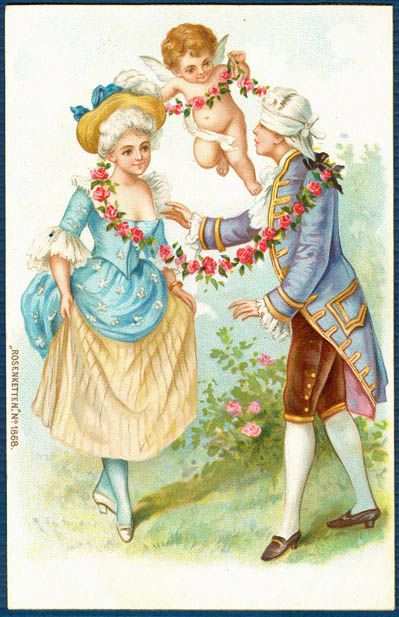
Elizabeth Graeme Fergusson led a life of wealth and privilege, romance and intrigue, followed by heartbreak, poverty, and sorrow. One of the most highly regarded women of her time, she was well educated, the daughter of a prominent Philadelphia physician and the granddaughter of the former Lt. Governor of Pennsylvania. She spent her summers at idyllic Graeme Park and her winters enjoying the social scene in Philadelphia. A published poet and socialite, she hosted famed literary gatherings and counted luminaries of Philadelphia’s political, social and intellectual elite amongst her closest friends and confidents.
Early in life, she seemed to have it all: engaged to William Franklin, money, prestige, family connections, and success. So how did it all go so wrong for her? Left broken-hearted when Franklin married another, the untimely deaths of her parents, an ill-fated marriage to Loyalist Henry Hugh Fergusson, and the subsequent Revolutionary War were to drastically alter the course of Elizabeth’s life. Her husband’s loyalties left Elizabeth fighting to keep her ancestral home and scant few of her possessions. Her husband returned to England, branded a traitor, rumors of his infidelity swirling through Philadelphia. She alienated all but her closest friends in her attempts to find out the truth about Henry’s “indiscretions.” Financial woes forced Elizabeth out of her beautiful estate at Graeme Park to take up rooms as a boarder and then guest in someone else’s home. Her last years were spent in virtual seclusion, only one friend by her side.
Learn about Elizabeth’s loves and losses on Graeme Park’s annual Valentine’s Day Tour, featuring costumed actors portraying scenes from Elizabeth’s life in vignettes throughout the historic Keith House. Tours are on Sunday, February 10 and will run approximately every half hour between 12:00 noon and 3:00 p.m. The cost is $12/person which includes light refreshments in the Visitor’s Center. No reservations. Call 215-343-0965 for more information. Directions are available at www.graemepark.org.
Friday, January 11, 2013
What Is It? Where Is It? (January): Marriage Marks

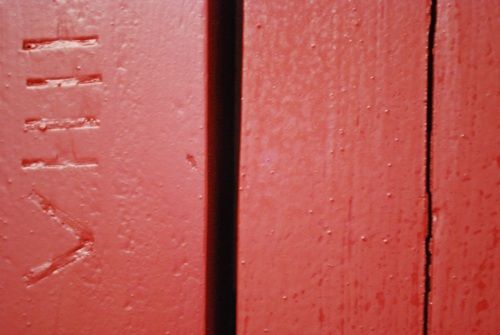
Last week we started a new monthly photo project called "What Is It? Where Is It?" As you might expect, we're asking readers to guess what we've featured in the photograph and where it is located around Graeme Park. January's "contest" (there are no prizes or anything, it's just for fun and bragging rights) featured the image above. Apparently it was a stumper as we had no responses, so let's get on with the answer, shall we?
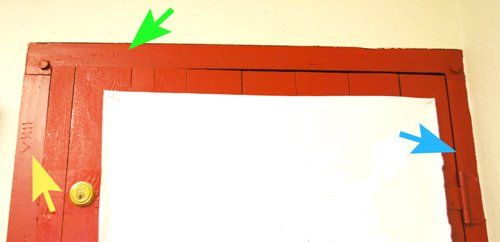
The photograph features what are called "marriage marks" or sometimes "carpenter's marks" and they're located around the closet door in the state's Historic Preservation field office here in the Visitors' Center (sorry, it was hard to get them to all show up in the same photograph). Here's a better view of the top and left side of the frame:
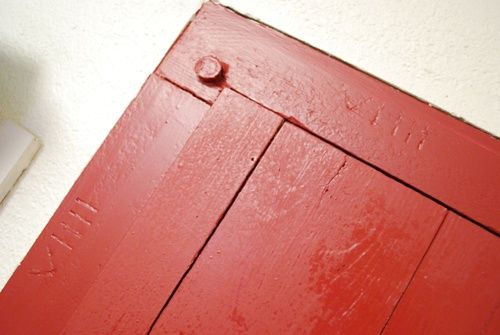
And the right side of the frame, partly covered by the hinge:
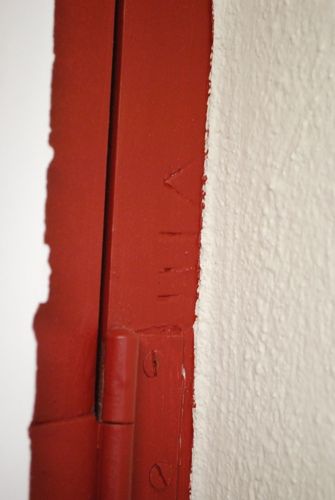
Each piece is marked "VIIII" (more or less a Roman numeral system but there are regional and cultural differences in the implementation) and the marks are to help the builder match up the pieces which are specifically cut to fit with one another and not with other similar pieces. These marks are commonly found in old timber frame buildings and barns because the pieces are cut and fit on the ground and then erected (just think of putting together IKEA furniture - piece A fits with piece A, B with B, etc.). Often the marks on the main structural elements are cut on the outside of the timbers so they're covered by the barn cladding, but you will also find them upstairs on the threshing floor of our barn cut into some of the posts and beams that support the barn.
In this older method of framing, called "scribe rule," each of the joints are custom fit to one another taking into account the irregularities of the timbers. Later came the "square rule" method which involved squaring off the timbers where they joined together and using more precise measurements which therefore made the pieces interchangeable with other pieces that performed the same function.
For more discussion on scribe rule vs. square rule, see Connecticut Barns and for more on marriage marks, see Holder Bros. Timber Frames.
Subscribe to:
Comments (Atom)
